History of Agra Fort
The site of Agra Fort has strategic significance stretching back centuries before the Mughals arrived. The earliest recorded mention of a fort at Agra is in Arthashastra-era literature, though the structure that tourists visit today is overwhelmingly a Mughal creation. The modern story begins with the First Battle of Panipat in 1526, when Babur, the founder of the Mughal dynasty, defeated Ibrahim Lodi of the Lodi Sultanate. Babur seized the Lodi treasury at the Agra fort and described finding a diamond there that many historians believe was the Koh-i-Noor — later gifted to Humayun. Babur used the existing Lodi fort as his residence and added a step-well (baoli) inside it.
The fort gained dynastic significance in 1530 when Babur's son, Humayun, was crowned here. However, in 1540, Humayun suffered a devastating defeat against Sher Shah Suri at the Battle of Bilgram. Sher Shah Suri took possession of the fort and introduced his own administrative and architectural changes. The Sur dynasty controlled Agra for the next 15 years. In 1555, Humayun briefly recaptured the fort, though Agra fell again to Hemu Vikramaditya, the Hindu general and chief minister of Adil Shah Suri, who seized the city before Akbar's forces routed him at the Second Battle of Panipat in 1556.
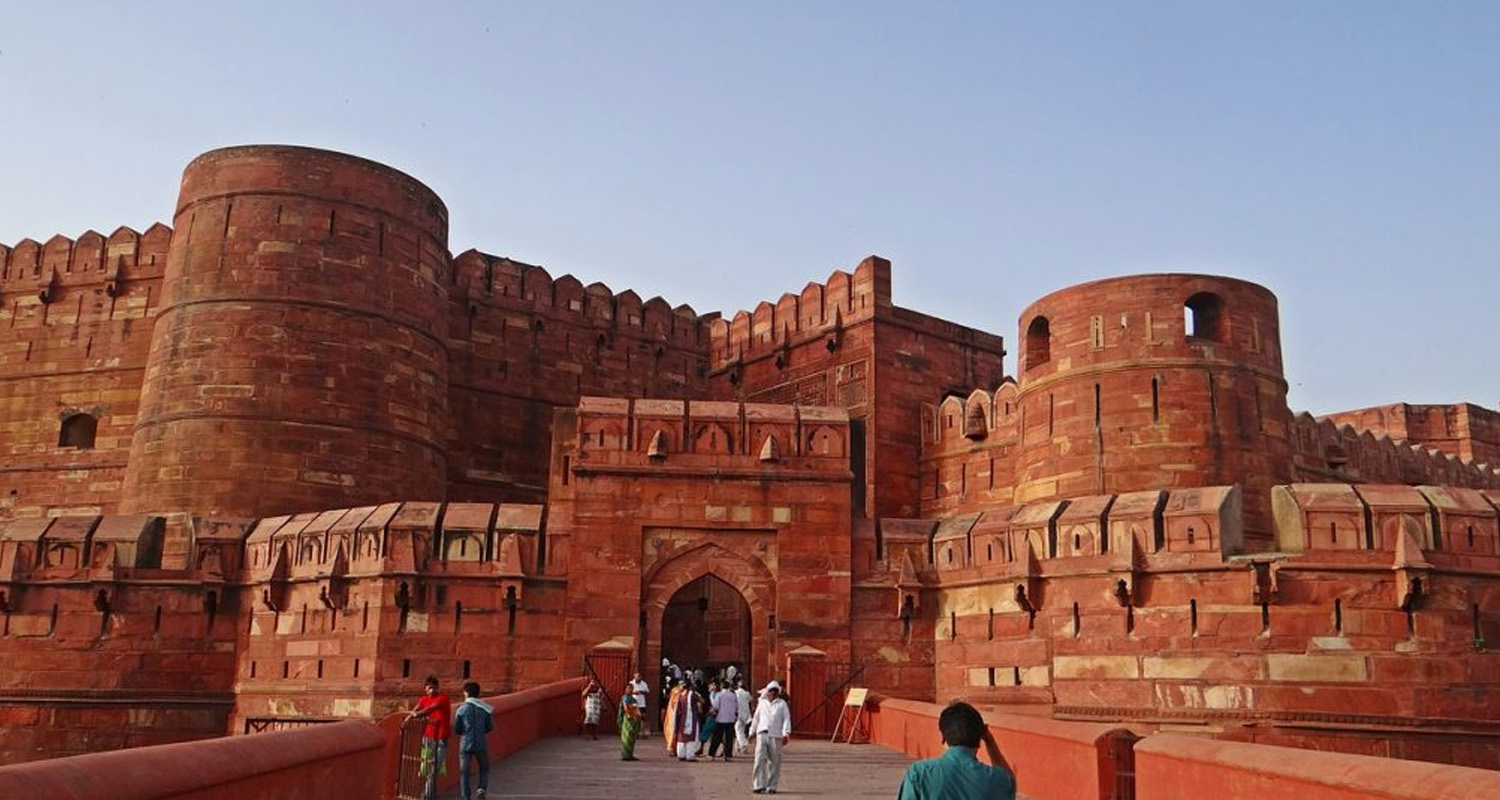
With Akbar firmly in power, the real transformation of Agra Fort began. Emperor Akbar found the existing mud-brick fort structurally inadequate for a great empire's capital. Between 1565 and 1573, he oversaw the construction of the massive red-sandstone fort that stands today, reportedly employing over 4,000 builders. The fort's outer wall stretches 2.5 km and rises to a height of 21 metres in places. When Shah Jahan succeeded to the throne in 1628, he shifted the architectural language dramatically — replacing many of Akbar's red-sandstone interiors with exquisite white marble inlaid with precious stones using the pietra dura technique. The fort served as the seat of Mughal imperial power until 1638, when Shah Jahan relocated the capital to Shahjahanabad (Old Delhi).
The most poignant episode in the fort's history came in 1658, when Shah Jahan's son Aurangzeb deposed his father in a bitter war of succession. Shah Jahan was imprisoned in the Musamman Burj — the very octagonal tower he had built — where he spent his final eight years until his death in 1666, reportedly gazing at the Taj Mahal across the Yamuna. After the Mughal decline, the fort passed through Maratha, Jat, and finally British East India Company hands following the Battle of Buxar. The British made significant alterations, demolishing many Mughal-era structures to build military barracks, though a substantial portion of the original complex still survives. Today, the northern section of the fort remains in active use by the Indian Army and is not accessible to the public.
Architecture of Agra Fort
Agra Fort is a superlative example of Mughal military and palace architecture, blending Persian, Timurid, Indian, and later Rajput and European influences over more than a century of successive construction. The fort is a crescent-shaped fortification following the curve of the Yamuna River, enclosed by a double-ramparted wall of red Rajasthani sandstone standing up to 21 metres high, with a 9-metre-deep moat.
When Emperor Akbar built the fort, the entire complex was in red sandstone — a style known as Akbari architecture or Indo-Islamic architecture — characterised by bold geometric forms, large proportions, and the use of bold red against the sky. Shah Jahan's interventions in the 1630s introduced the hallmark of his reign: pure white Makrana marble inlaid with semi-precious stones (lapis lazuli, carnelian, jasper) in floral and geometric patterns. The contrast between the robustly martial outer walls and the extraordinarily refined palace interiors is one of the fort's most compelling visual narratives.
The legend of temperature regulation is well-documented in Mughal court records: the palace rooms were designed with a sophisticated system of hollow walls through which water from the Yamuna was channelled, functioning as an early form of air conditioning and keeping the interiors cool during the punishing North Indian summers.
Key Structures Inside Agra Fort
🏛 Diwan-i-Aam (Hall of Public Audience)
A large, open colonnaded hall where the emperor held court and received petitions from common subjects. Built by Shah Jahan in white marble, the central throne alcove features exquisite pietra dura work. The hall could accommodate thousands of petitioners.
🏛 Diwan-i-Khas (Hall of Private Audience)
Reserved for meetings with nobles, ambassadors, and high officials. Shah Jahan's white-marble pavilion here is famous for its delicate marble screens (jali) and the legendary line inscribed: "If there is paradise on earth, it is here, it is here, it is here."
△ Musamman Burj (Octagonal Tower)
The most emotionally resonant structure in the fort. Built by Shah Jahan as a private royal chamber, it was here that he was imprisoned by his son Aurangzeb from 1658 until his death in 1666. The tower faces the Taj Mahal directly. The marble jali screens and inlay work are among the finest in the fort.
🏛 Khas Mahal (Private Palace)
A private sleeping chamber of Shah Jahan built in white marble, flanked by two gilded pavilions. The Khas Mahal opens onto the Anguri Bagh (Grape Garden), a formal Mughal garden laid out in precise geometric patterns, said to have once been planted with grape vines.
🏛 Jahangiri Mahal
The only major surviving Akbar-era palace within the fort, built for his son Prince Salim (later Emperor Jahangir). It is the largest structure in the fort and showcases Akbar's synthesis of Hindu and Islamic architectural motifs — bracket corbels, carved peacocks, and bold sandstone columns alongside Islamic arches.
△ Amar Singh Gate (Main Tourist Entrance)
The southern gateway through which tourists enter today. Named after Amar Singh Rathore of Jodhpur, who was killed near this gate after stabbing the Mughal governor in 1644. The gate features a deliberately winding approach — a classic medieval military design to prevent enemy war-elephants from building up a battering charge.
🏛 Delhi Gate
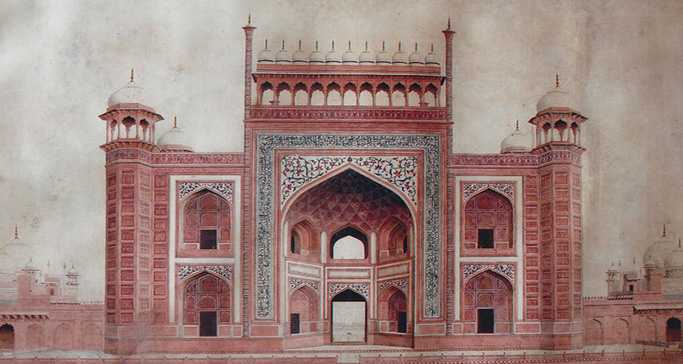
The western and most majestic of the fort's four gates, considered Akbar's masterpiece in gate design. It faces the city of Delhi. Two life-sized stone elephant statues once flanked the gateway (destroyed by Aurangzeb). Today it is used by the Indian Army and is closed to tourists.
🏛 Moti Masjid (Pearl Mosque)
A three-domed white marble mosque of extraordinary purity, built by Shah Jahan for his private use. The mosque's three marble bulbous domes and a pristine white courtyard give it an otherworldly luminosity. It is considered one of the finest small mosques of the Mughal period.
💡 Expert Visitor Tips for Agra Fort
- Best time to visit: Arrive at opening (6 AM) or an hour before closing (5 PM) to avoid peak crowds and harsh midday heat. October–March is ideal.
- Combine with Taj Mahal: Agra Fort is only 2.5 km from the Taj Mahal — plan both in one day. Visit the Taj at sunrise, then walk or take a rickshaw to the fort by mid-morning.
- Composite Ticket: If visiting multiple ASI monuments in Agra on the same day, check availability of composite tickets which can offer savings.
- Light & Sound Show: A nightly sound-and-light show brings the fort's history to life after sunset. Highly recommended for first-time visitors.
- Photography: Photography is permitted throughout the public areas. A separate camera fee may apply.
- Guides: Licensed ASI guides are available at the entrance. Always hire a guide with a visible licence badge.
- Footwear: Wear comfortable, flat shoes — the fort involves considerable walking on uneven stone surfaces.
How to Reach Agra Fort
By Air: Agra has its own civil airport — Pandit Deen Dayal Upadhyaya Airport (AGR), located approximately 12 km from Agra Fort. IndiGo and Air India operate seasonal scheduled flights from Delhi and other cities. However, the most convenient gateway remains Indira Gandhi International Airport, New Delhi (DEL), which is approximately 200 km from Agra. From Delhi airport, the preferred options are the Gatimaan Express train (Delhi to Agra Cantt in 1 hr 40 min) or a pre-booked AC cab via the Yamuna Expressway (approx. 3 hrs, depending on traffic).
By Train: Agra is one of the best-connected railway junctions in North India, served by Agra Cantt and Agra Fort railway stations. The fastest services from Delhi include the Gatimaan Express (1 hr 40 min) and the Shatabdi Express via Mathura (2 hrs). From Jaipur, the Intercity Express covers the journey in approximately 3.5 hours. From Mumbai and Chennai, trains on the Mumbai-Delhi and Chennai-Delhi trunk routes stop at Agra Cantt. From the station, auto-rickshaws, cycle-rickshaws and pre-paid taxis are available to reach the fort (approx. 10–15 min ride).
By Road: Agra lies at the intersection of major national highways: NH 19 (Delhi–Kolkata) and NH 44 (Delhi–Chennai). The Yamuna Expressway (NH 19) from Delhi (165 km) is the fastest road route — a 6-lane expressway reducing drive time to around 2.5–3 hours from Delhi. From Jaipur, take NH 21 (240 km, approx. 4 hrs). From Mathura, it is just 58 km on NH 19 (approx. 1 hr). State roadways and private bus services operate from Delhi, Jaipur, Gwalior, Kanpur, and Lucknow, with terminals at Idgah Bus Stand and ISBT Agra.
Nearby Attractions in Agra
| Attraction | Distance from Fort | Highlights |
|---|---|---|
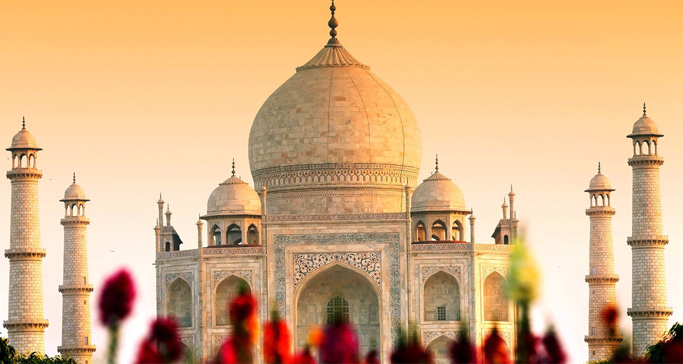
| Taj Mahal | 2.5 km (10 min) | UNESCO World Heritage Site; Shah Jahan's eternal monument to Mumtaz Mahal; best visited at sunrise |
| Itmad-ud-Daulah's Tomb | 4.5 km (15 min) | First Mughal structure built entirely in marble; called 'Baby Taj'; built by Noor Jahan for her father |
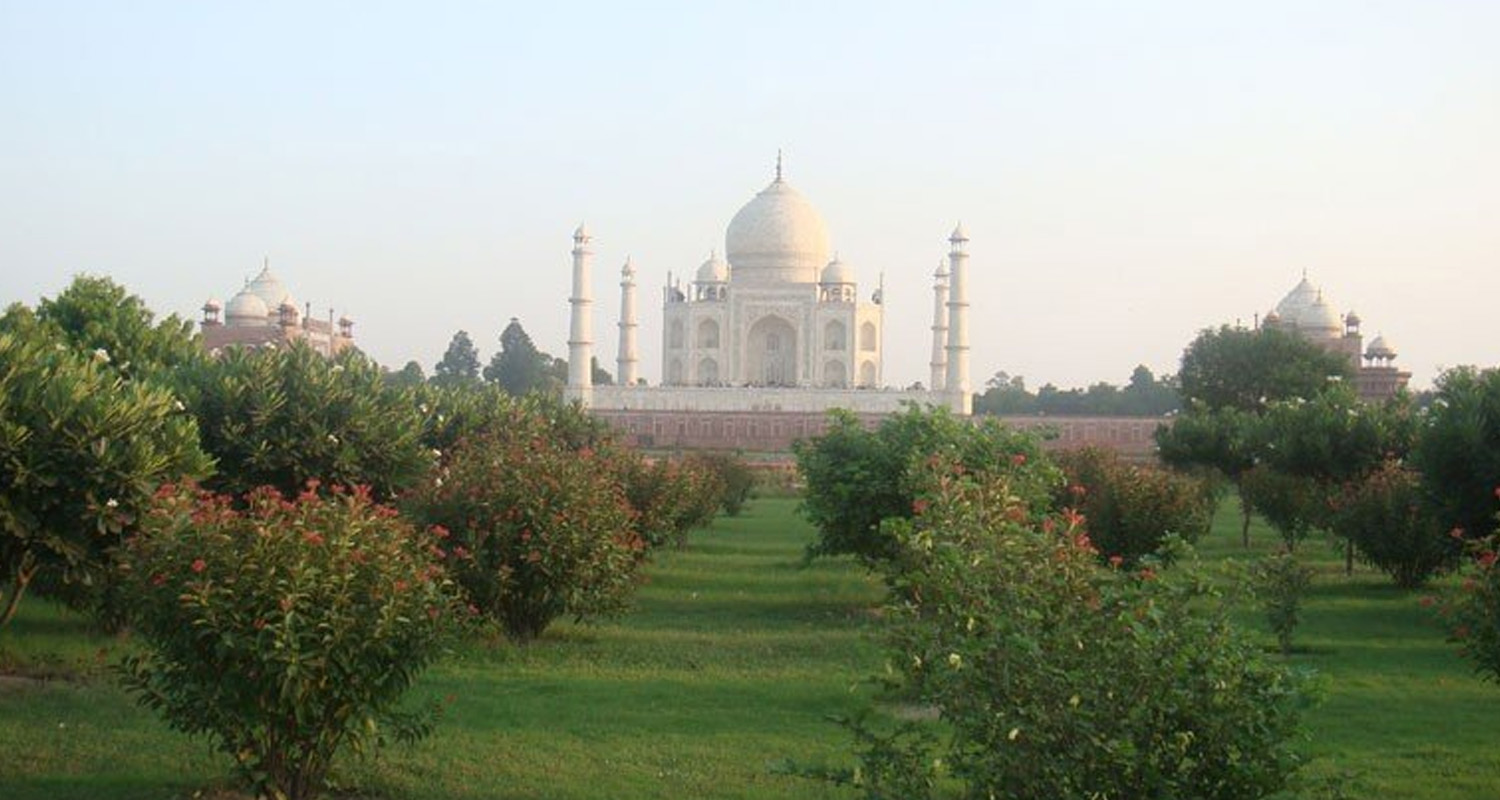
| Mehtab Bagh | 5 km (18 min) | Moonlight garden directly across the Yamuna from the Taj Mahal; offers the best sunset view of the Taj |
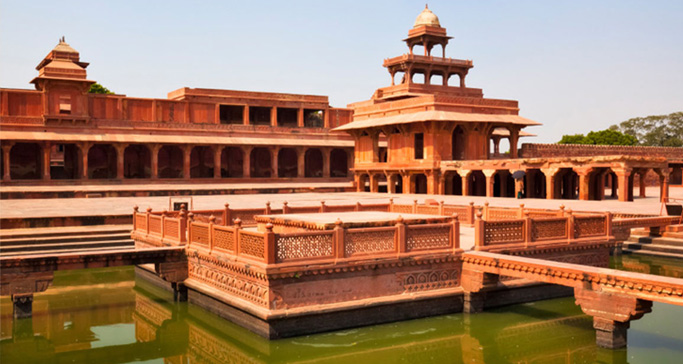
| Fatehpur Sikri | 37 km (45 min) | UNESCO World Heritage Site; Akbar's ghost capital of red sandstone; Buland Darwaza, Jodha Bai Palace, Salim Chishti's Dargah |
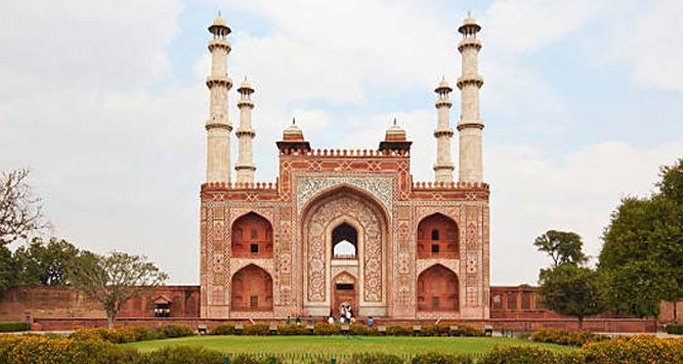
| Akbar's Tomb (Sikandara) | 10 km (20 min) | Akbar's majestic 5-storey tomb mausoleum in a landscaped garden; unique blend of Hindu, Christian, Islamic, and Buddhist architectural elements |
| Taj Museum | 3 km (12 min) | Inside the Taj Mahal complex; houses Mughal-era artefacts, manuscripts, and coins; free with Taj Mahal entry ticket |
Frequently Asked Questions – Agra Fort
Agra Fort is open every day from 6:00 AM to 6:00 PM, including Sundays and public holidays. There is no weekly closure day. The light-and-sound show is held in the evenings — timings vary by season (typically 7:30–8:30 PM in summer; 6:30–7:30 PM in winter). Tickets for the sound and light show are purchased separately at the gate.
Entry fee is ₹40 per person for Indian nationals and ₹550 per person for foreign nationals. Children below 15 years of age are admitted free. An additional ₹25 is charged for video cameras. The evening light-and-sound show has a separate entry charge. Tickets can be purchased at the Amar Singh Gate ticket counter or online through the ASI portal.
The present-day Agra Fort was substantially built by Emperor Akbar between 1565 and 1573 using red sandstone from Rajasthan, employing over 4,000 artisans. However, his grandson Shah Jahan later demolished many structures and rebuilt them in white Makrana marble. Earlier structures on the site date to the Lodi Sultanate (pre-1526). The fort was also briefly held by Sher Shah Suri (1540–1555).
Yes — the Taj Mahal is clearly visible from the Musamman Burj (Octagonal Tower) inside Agra Fort. The distance between the two monuments is approximately 2.5 km in a straight line along the Yamuna River. This is the very spot where Shah Jahan, imprisoned by Aurangzeb from 1658, spent his final years reportedly gazing at the Taj Mahal he had built for his wife.
A thorough visit to Agra Fort takes 2 to 3 hours. If you have a licensed guide, allow 2.5 hours. The fort covers 94 acres and the public access area includes the Diwan-i-Aam, Diwan-i-Khas, Khas Mahal, Jahangiri Mahal, Musamman Burj, Anguri Bagh, and Moti Masjid. The northern section is a restricted Army area and not accessible to tourists.
Yes. Agra Fort was inscribed as a UNESCO World Heritage Site in 1983, recognised for its outstanding Mughal military and palace architecture. Agra is unique in India in having three UNESCO World Heritage Sites within the same city: Agra Fort (1983), Taj Mahal (1983), and Fatehpur Sikri (1986).